
Ahmedabad, Gujarat, India
ISO 9001:2008 Certified
Waste Management Solutions

HDPE Pipes for Effluent & Sewage Disposal

We are a professional manufacturer and supplier of HDPE Pipes and PPR Pipes for Effluent and Sewage Disposal in India. HDPE Pipes manufactured by Shree Harikrishna Group that can be used for both Effluent and Sewage Disposal.

Durable Infrastructure

As our products are made of the best quality and durable for long life service that is useful for our customer’s specifications. We are dedicating and focused on developing only best quality for our clients that meet the desired standards of perfection. It is more flexible other than metal based pipes and resistance to environment cracks.
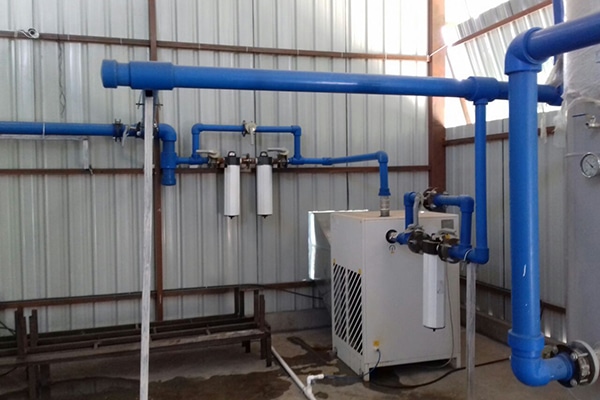
Sewage Disposal Piping
Features

Features of Sewage Piping

Resistance to environmental stress cracks

High flexibility for difficult job site installations

Toughness to survive extreme loading conditions

Application of Sewage Disposal

We are trying to improve our products in different sizes as per our client’s satisfaction with durability and toughness to survive job site installations, perfect for both municipal and industrial waste transport.

Advantages of Sewage Disposal

Superior flexibility compared to metal pipes
High resistance to environment cracks
Long-life service with minimal maintenance
FAQS

Frequently Asked Questions

1. Why are HDPE pipes used for effluent and sewage systems? + HDPE pipes are widely used for effluent and sewage systems because they are corrosion-resistant, leak-proof, durable, and capable of handling wastewater efficiently.
2. Are HDPE pipes resistant to sewage chemicals? + Yes. HDPE pipes offer excellent resistance to chemicals, acids, alkalis, and corrosive substances commonly found in sewage and industrial effluent.
3. Can HDPE pipes be installed underground for sewage networks? + Yes. HDPE pipes are highly flexible, strong, and resistant to soil movement, making them an ideal choice for underground sewage and drainage systems.
4. What are the advantages of HDPE pipes in effluent treatment plants?+ HDPE pipes provide leak-free joints, smooth flow, long service life, low maintenance, and excellent resistance to corrosion, reducing operational costs.
5. Do HDPE pipes prevent leakage in sewage applications?+ Yes. Heat-fused joints create a continuous leak-proof pipeline, helping prevent groundwater contamination and wastewater loss.
6. Can HDPE pipes handle high-flow wastewater systems?+ Yes. Their smooth inner surface reduces friction, allowing efficient flow and minimizing the risk of blockages in high-volume wastewater systems.
7. Are HDPE pipes suitable for industrial effluent disposal?+ Yes. HDPE pipes are widely used in industries to transport treated and untreated effluent due to their excellent chemical and corrosion resistance.
8. How long do HDPE pipes last in sewage applications?+ With proper installation and maintenance, HDPE pipes can provide reliable performance for 50 years or more in sewage and wastewater systems.
9. Do HDPE pipes require frequent maintenance?+ No. HDPE pipes require minimal maintenance because they resist corrosion, scaling, cracking, and root intrusion, ensuring long-term reliability.
10. How do I choose the right HDPE pipe for an effluent or sewage project?+ Select the pipe based on wastewater type, pressure rating, pipe diameter, installation conditions, and project requirements to ensure efficient and long-lasting performance.